untitled + rocha-ígnea
2021
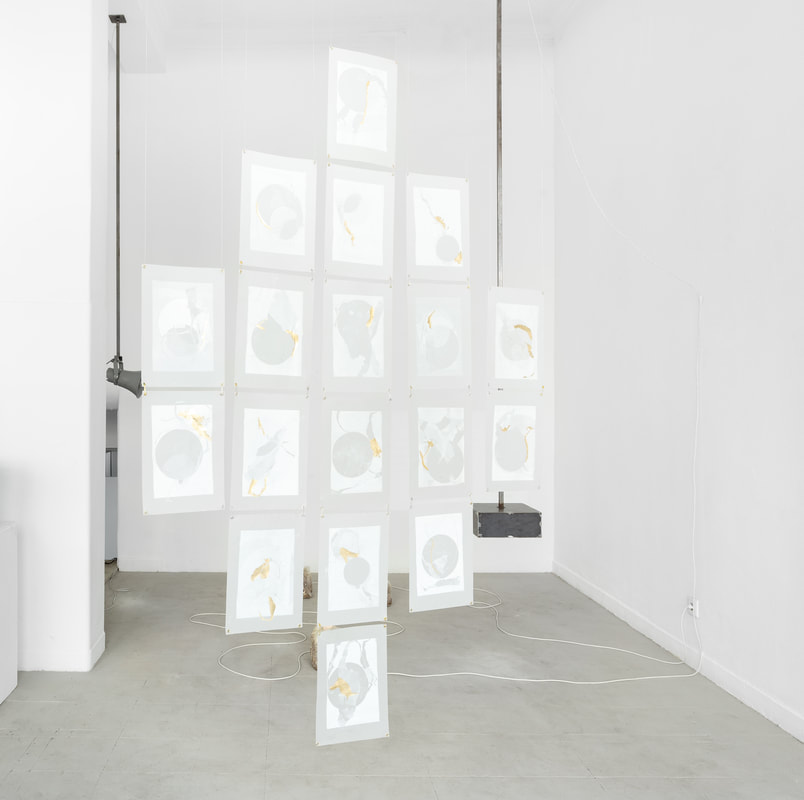
Trauma Response Exhibition view w/ the work "Untitled"(2021)
EN_ Trauma Response - collective show curated by Judith Hopfer
With the artists: Yota Ayaan, Catarina Simão, Filipe Cortez, Juliana Matsumura, Maria Máximo, MARIE ANTOINETTE and Theodore Ereira-Guyer | Duplex AIR - Lisbon
When a volcano erupts, the trembling earth and its fiery lava destroy everything in its way without remorse. But at the same time it is a great transformation - the birth of something new. The black ashes raining down on the ground will provide a fruitful humus for novel life to arise. A new environment is created.
Our world is shaped by various traumata. They shape our nervous systems, our behavior, our societies. Trauma leaves imprints on our minds, marks on our bodies and the planets landscapes. If we learn to consciously observe and listen to our surroundings, we can find traces of past trauma in the faces of our cities, all the layers of memory and history in its facades, the beautiful plants that are growing around us, in the composition of the air we breathe and the water we drink. Traumata can be inherited for many generations, controlling our behavior, without us even consciously knowing about it.
There are many collective, personal and environmental traumata in history and there is a conspiracy of silence around many of them. In these times of human made catastrophes, we need to look at these shadows of human existence, so we can finally learn from them, become aware of dangerous patterns and not repeat history.
Now is an especially critical and interesting time in human history and we can set the direction where humanity is going to head. This is a moment in time where culture could experience an evolution. Creating is culture and culture evolves in crisis. We have to see it as an opportunity to begin something anew.
This exhibition tries to shed light on a variety of ways of responding to trauma.
It tries to show its contrasting sides: the suffering, but also possibilities of coping and the beauty that can emerge from it. How do we respond to trauma? How can we heal after incising, paralyzing pain and suffering? Like the Jacaranda tree, that blooms twice a year in Portugal - in spring and again in autumn, when it is spring in its origin Brazil - we also can evolve and create something beautiful out of our traumata.
Judith Hopfer
With the artists: Yota Ayaan, Catarina Simão, Filipe Cortez, Juliana Matsumura, Maria Máximo, MARIE ANTOINETTE and Theodore Ereira-Guyer | Duplex AIR - Lisbon
When a volcano erupts, the trembling earth and its fiery lava destroy everything in its way without remorse. But at the same time it is a great transformation - the birth of something new. The black ashes raining down on the ground will provide a fruitful humus for novel life to arise. A new environment is created.
Our world is shaped by various traumata. They shape our nervous systems, our behavior, our societies. Trauma leaves imprints on our minds, marks on our bodies and the planets landscapes. If we learn to consciously observe and listen to our surroundings, we can find traces of past trauma in the faces of our cities, all the layers of memory and history in its facades, the beautiful plants that are growing around us, in the composition of the air we breathe and the water we drink. Traumata can be inherited for many generations, controlling our behavior, without us even consciously knowing about it.
There are many collective, personal and environmental traumata in history and there is a conspiracy of silence around many of them. In these times of human made catastrophes, we need to look at these shadows of human existence, so we can finally learn from them, become aware of dangerous patterns and not repeat history.
Now is an especially critical and interesting time in human history and we can set the direction where humanity is going to head. This is a moment in time where culture could experience an evolution. Creating is culture and culture evolves in crisis. We have to see it as an opportunity to begin something anew.
This exhibition tries to shed light on a variety of ways of responding to trauma.
It tries to show its contrasting sides: the suffering, but also possibilities of coping and the beauty that can emerge from it. How do we respond to trauma? How can we heal after incising, paralyzing pain and suffering? Like the Jacaranda tree, that blooms twice a year in Portugal - in spring and again in autumn, when it is spring in its origin Brazil - we also can evolve and create something beautiful out of our traumata.
Judith Hopfer
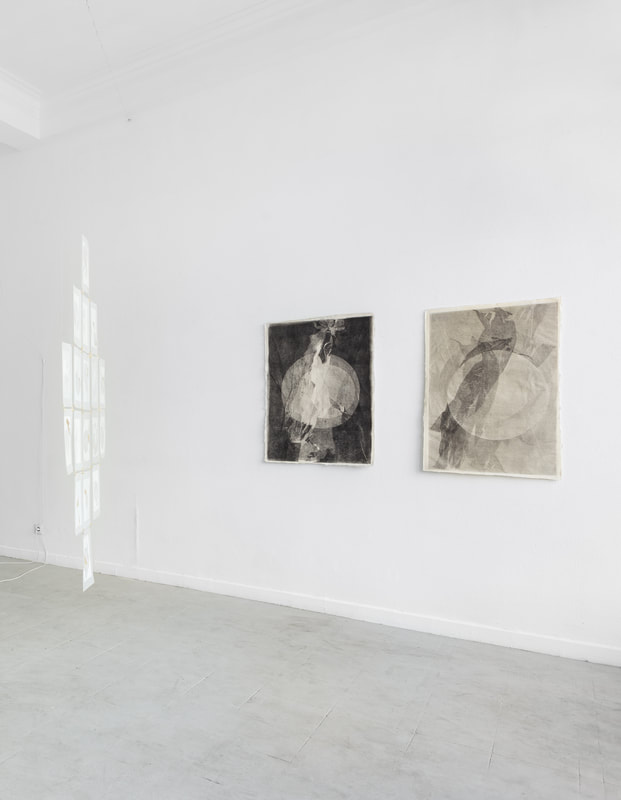
Trauma Response Exhibition view w/ the work "Untitled" (left) and 2 works from the "Igneous Rock" series (right)- Duplex AIR Lisbon